

If you’ve ever searched for the “perfect” diet, you’ve probably come across countless promises of rapid weight loss, miracle supplements, or extreme meal plans. While these approaches may seem tempting, they rarely deliver lasting results. In many cases, they can even make maintaining a healthy weight more difficult over time.
The truth is that healthy weight loss isn’t about starving yourself or following restrictive trends. It’s about building sustainable habits that nourish your body, support your metabolism, and fit naturally into your everyday life.
Whether your goal is to improve your health, increase your energy, feel more confident, or simply adopt a healthier lifestyle, this guide will walk you through practical, evidence-based strategies that can help you reach your goals in a realistic and sustainable way.
Why Healthy Weight Loss Matters
Healthy weight loss is about much more than appearance.
Maintaining a healthy weight may help:
- Increase daily energy levels
- Improve heart health
- Support healthy blood sugar levels
- Reduce stress on joints
- Improve sleep quality
- Boost confidence and self-esteem
- Lower the risk of chronic diseases
- Support long-term overall wellness
Instead of focusing only on the number on the scale, it’s helpful to think about building habits that improve your health for years to come.
15 Daily Habits That Actually Work
1. Start Your Morning with Water
After several hours of sleep, your body naturally becomes slightly dehydrated. Drinking one or two glasses of water shortly after waking up helps replenish fluids and supports normal body functions.
Tip:
Keep a reusable water bottle by your bedside to make this habit easier.
2. Eat a Protein-Rich Breakfast
Protein helps you feel full and satisfied while supporting muscle maintenance.
Great breakfast options include:
- Greek yogurt with berries
- Eggs and whole-grain toast
- Cottage cheese with fruit
- Protein smoothie
- Oatmeal topped with nuts and seeds
3. Fill Half Your Plate with Vegetables
Vegetables are naturally rich in vitamins, minerals, and fiber while being relatively low in calories.
Aim to include colorful vegetables at both lunch and dinner.
Examples:
- Broccoli
- Spinach
- Bell peppers
- Cucumbers
- Carrots
- Tomatoes
- Zucchini
4. Choose Whole Foods More Often
Whole foods are generally less processed and often contain more nutrients than heavily processed alternatives.
Focus on:
- Fruits
- Vegetables
- Whole grains
- Lean proteins
- Beans
- Nuts
- Seeds
- Healthy fats
5. Stay Active Every Day
You don’t have to spend hours at the gym.
Even small amounts of daily movement can make a difference.
Ideas include:
- Walking
- Cycling
- Dancing
- Swimming
- Yoga
- Strength training
- Home workouts
Aim for consistency rather than perfection.
6. Prioritize Strength Training
Building muscle helps improve strength and supports overall fitness. Muscle tissue also requires energy to maintain, making strength training a valuable part of a healthy lifestyle.
Begin with two or three sessions each week using:
- Bodyweight exercises
- Resistance bands
- Dumbbells
- Gym machines
7. Eat Mindfully
Many people eat while scrolling through their phones or watching television.
Mindful eating encourages you to:
- Slow down
- Chew thoroughly
- Notice hunger and fullness cues
- Enjoy your meals
This simple habit can help reduce overeating.
8. Get Enough Sleep
Poor sleep can affect appetite, energy, and food choices.
Adults generally benefit from around 7–9 hours of sleep each night.
To improve sleep:
- Keep a regular bedtime.
- Limit screen time before bed.
- Make your bedroom cool and comfortable.
- Reduce caffeine later in the day.
9. Drink More Water Throughout the Day
Water supports digestion, circulation, and overall health.
A reusable water bottle can help you stay hydrated throughout the day.
10. Reduce Sugary Drinks
Replacing sugary beverages with water, sparkling water, or unsweetened tea is one simple way to reduce added sugar intake.
11. Plan Your Meals
Meal planning helps reduce impulsive food choices and makes healthy eating more convenient.
Prepare healthy snacks such as:
- Apple slices
- Mixed nuts
- Carrot sticks
- Greek yogurt
- Fresh berries
- Hard-boiled eggs
12. Manage Stress
Chronic stress can influence eating habits and overall well-being.
Healthy stress-management ideas include:
- Meditation
- Journaling
- Walking outdoors
- Deep breathing
- Reading
- Listening to music
13. Don’t Fear Healthy Fats
Healthy fats are an important part of a balanced diet.
Include foods like:
- Avocados
- Olive oil
- Salmon
- Almonds
- Walnuts
- Chia seeds
14. Track Progress Beyond the Scale
Weight naturally fluctuates.
Instead of focusing only on the scale, also notice:
- Increased energy
- Better sleep
- Improved strength
- Clothes fitting differently
- Healthier eating habits
- Improved mood
15. Be Patient and Consistent
Healthy weight loss takes time.
Small daily improvements often lead to meaningful long-term results.
Healthy Foods That Support Weight Loss
Building balanced meals can help you stay satisfied while meeting your nutritional needs.
Lean Proteins
- Chicken breast
- Turkey
- Fish
- Eggs
- Tofu
- Lentils
- Greek yogurt
Healthy Carbohydrates
- Oats
- Brown rice
- Quinoa
- Sweet potatoes
- Whole-grain bread
- Beans
Healthy Fats
- Olive oil
- Avocados
- Nuts
- Seeds
- Natural peanut butter
Fruits
- Apples
- Berries
- Oranges
- Kiwi
- Grapefruit
- Pears
Vegetables
- Spinach
- Kale
- Broccoli
- Cauliflower
- Cucumbers
- Bell peppers
- Asparagus
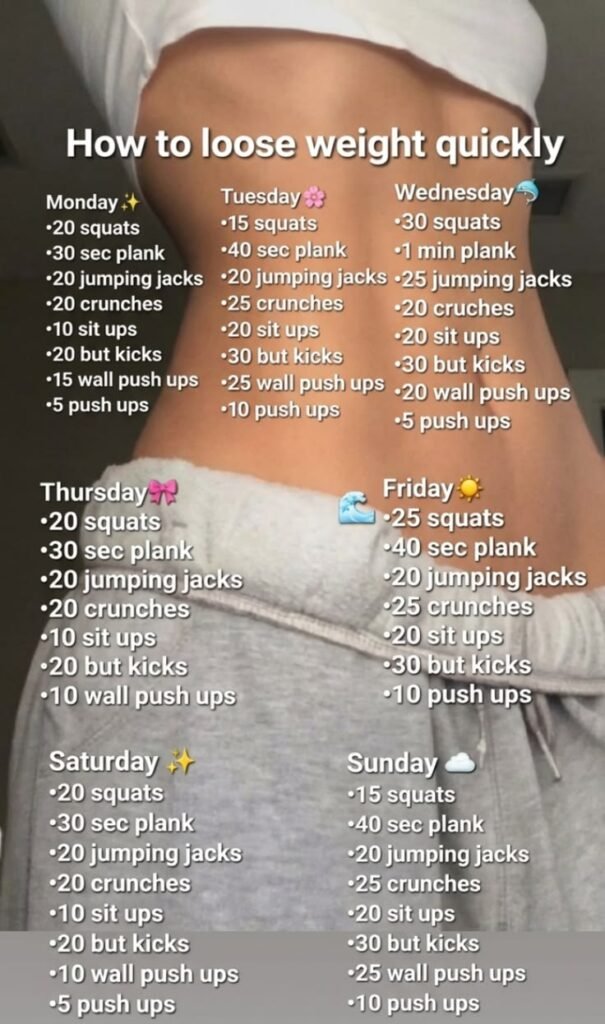
Simple Weekly Workout Plan
Monday
30-minute brisk walk + light stretching
Tuesday
Full-body strength training
Wednesday
Yoga or gentle mobility exercises
Thursday
Interval walking or cycling
Friday
Strength training
Saturday
Outdoor activity such as hiking, swimming, or dancing
Sunday
Active recovery with stretching or an easy walk
Remember to choose activities you enjoy, as consistency is more important than intensity.
Common Weight Loss Mistakes
Avoid these common pitfalls:
- Skipping meals
- Following extremely restrictive diets
- Expecting overnight results
- Drinking too many sugary beverages
- Ignoring sleep
- Relying only on cardio
- Eating too quickly
- Comparing your progress to others
Healthy Lifestyle Tips That Make a Big Difference
Small daily habits can add up over time:
- Take the stairs when possible.
- Walk after meals.
- Keep healthy snacks nearby.
- Cook more meals at home.
- Read food labels.
- Stay hydrated.
- Eat slowly.
- Celebrate progress, not perfection.
Frequently Asked Questions
How quickly can I lose weight safely?
A gradual rate of weight loss is generally considered more sustainable than rapid weight loss. Individual results vary depending on many factors, including nutrition, activity level, sleep, and overall health.
Do I need to completely avoid carbs?
No. Carbohydrates can be part of a balanced diet. Choosing whole-grain and high-fiber options is often more beneficial than eliminating carbs altogether.
Is walking enough for weight loss?
Walking can contribute to weight loss and overall health, especially when combined with balanced nutrition and regular physical activity.
Should I weigh myself every day?
Some people find regular weigh-ins motivating, while others prefer checking less often. Since body weight naturally fluctuates, it’s also helpful to monitor progress through energy levels, fitness, and how clothes fit.
Can I still enjoy desserts?
Yes. Enjoying favorite foods occasionally as part of a balanced eating pattern can make healthy habits easier to maintain over the long term.
Final Thoughts
Healthy weight loss isn’t about chasing perfection or following the latest diet trend. It’s about creating a lifestyle that supports your physical and mental well-being through balanced nutrition, regular movement, quality sleep, and consistent daily habits.
Start with one or two changes that feel realistic for your routine. Over time, these small habits can become lasting lifestyle changes that help you feel stronger, healthier, and more confident. Remember, progress isn’t measured only by the scale—it’s reflected in your energy, strength, and overall quality of life.