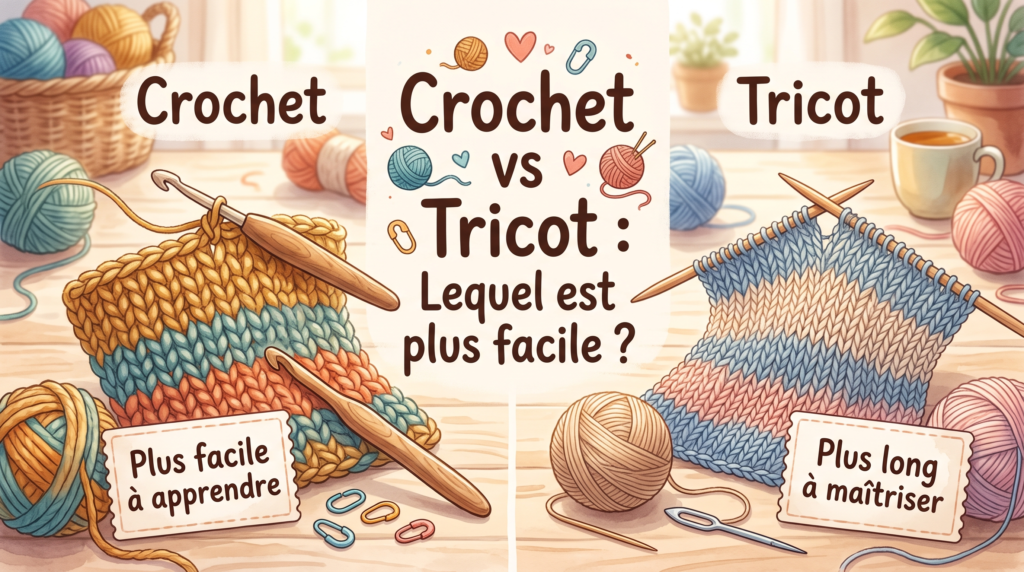
Is Crochet Easier Than Knitting? The Honest Answer for Beginners
If you’ve ever stood in a craft store holding a crochet hook in one hand and a pair of knitting needles in the other, wondering which one to buy first — you’re not alone. It’s one of the most common questions new crafters ask, and the short answer is: yes, crochet is generally easier to learn than knitting, mainly because it uses one tool instead of two, mistakes are easier to fix, and you can finish a first project in a single afternoon.
But “easier” doesn’t mean “better” for everyone. Below, we break down exactly why crochet has the edge for most beginners, when knitting might actually suit you more, and answer every question people typically ask when comparing the two crafts.
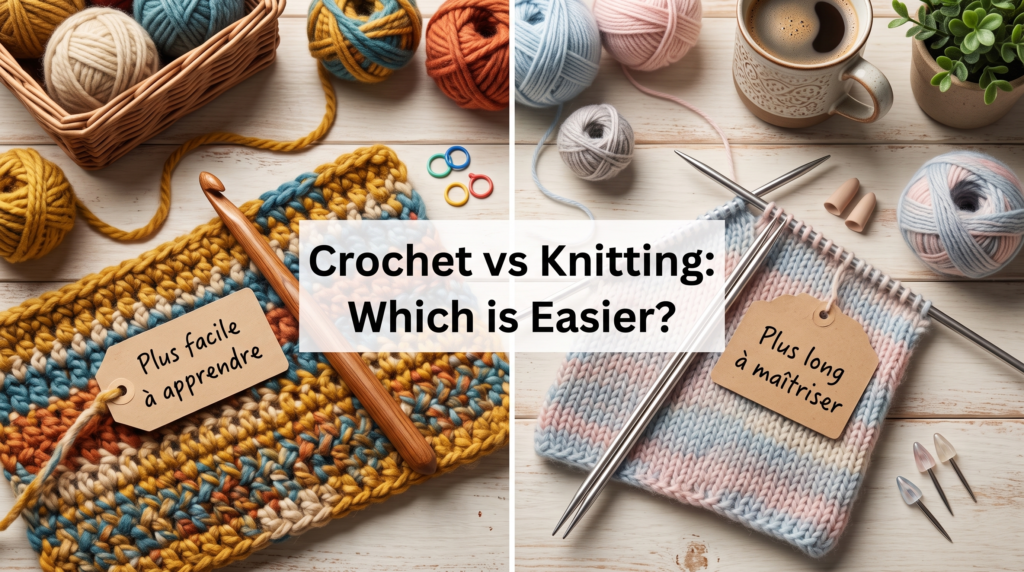
Quick Answer: Crochet vs Knitting at a Glance
| Factor | Crochet | Knitting |
|---|---|---|
| Tools needed | 1 hook | 2 needles (minimum) |
| Learning curve | Faster | Slower |
| Fixing mistakes | Easy — unravel one loop at a time | Harder — dropped stitches can run |
| Active stitches to track | 1 loop | A full row of live stitches |
| Best first project | Dish cloth, granny square | Scarf (garter stitch) |
| Fabric result | Thicker, stretches less | Thinner, drapes more |
| Time to basic competence | 1–2 weeks of practice | 3–4 weeks of practice |
Why Crochet Is Easier to Learn Than Knitting
You Only Work With One Live Stitch at a Time
In knitting, an entire row of stitches sits “live” on your needle — if you drop one, it can unravel down through several rows before you notice. In crochet, there’s only ever one active loop on your hook. This single difference is the biggest reason crochet feels more forgiving to total beginners.
Mistakes Are Simple to Undo
Made an error in crochet? You simply pull the hook out and unravel back to your mistake — the yarn doesn’t run or ladder the way it can in knitting. This lowers the frustration barrier significantly in the first few sessions.
One Tool, Not Two
Coordinating two needles at once (especially the “throw” or “pick” motion in knitting) takes more hand-eye coordination than manipulating a single hook. Most people find single-tool coordination faster to build muscle memory for.
How Hard Is It to Crochet for Beginners, Really?
Most beginners can learn the four foundational stitches — chain, single crochet, half-double crochet, and double crochet — within their first one to two practice sessions. Tension (how tightly you hold the yarn) is usually the trickiest part to master, not the stitches themselves. Expect your first few rows to look uneven; this evens out naturally within your first two or three projects.
How Long Will It Take to Learn Crochet?
- Basic stitches: 1–3 days of short practice sessions
- Comfortable, even tension: 2–3 weeks of regular practice
- First finished project (dishcloth, coaster, granny square): Same day to first week
- Reading patterns confidently: 1–2 months
- Intermediate skills (garment shaping, colorwork): 3–6 months
Compare that to knitting, where most learners need three to four weeks just to feel comfortable holding tension evenly across two needles.
What’s the Easiest Thing to Crochet as a First Project?
For your very first project, pick something small, flat, and forgiving of uneven tension:
- A single crochet dishcloth — just chains and single crochet stitches in straight rows
- A granny square — teaches turning, joining, and basic shaping in one small piece
- A simple coaster — finishes in under 30 minutes
- A chunky scarf in double crochet — bigger hook and yarn hide beginner mistakes
Avoid amigurumi (stuffed toys), garments, or anything requiring exact gauge as a first project — save those for once your tension is consistent.
Is Crochet Good for Your Brain?
Yes — and this is well documented, not just anecdotal. Repetitive, pattern-based crafts like crochet are associated with:
- Lower reported stress and anxiety levels during and after a session
- Improved fine motor coordination and dexterity
- A meditative, flow-like mental state similar to what’s reported in mindfulness practice
- Cognitive engagement from pattern-reading and counting, which some occupational therapists use as a light cognitive exercise
This is one reason crochet has surged as a stress-relief hobby alongside its recent fashion resurgence.
Which Craft Is Better for Beginners: Crochet or Knitting?
For a true beginner with no prior experience in either, crochet wins on ease of entry. It has a shorter path to a finished, usable object, a gentler mistake-recovery process, and a lower tool/setup cost. Knitting tends to be better suited to people who already know they want to make garments with a soft drape (like sweaters) and don’t mind a steeper first few weeks.
Should a Beginner Start With Knitting or Crocheting?
Start with crochet if you:
- Want to finish a project quickly and stay motivated
- Prefer learning by fixing mistakes as you go rather than avoiding them
- Want a portable, single-tool hobby
Start with knitting if you:
- Specifically want to make sweaters, socks, or drapey garments long-term
- Enjoy a slower, more meditative rhythm
- Already have someone to teach you in person, which flattens knitting’s learning curve considerably
What Can You Crochet That You Can’t Knit?
Crochet’s structure (looping through a single stitch at a time) makes it uniquely suited to:
- Amigurumi — 3D stuffed toys and characters, which rely on crochet’s dense, sculptable fabric
- Filet crochet — openwork “pixel art” style pieces used for curtains and wall art
- Freeform crochet — organic, sculptural shapes with no fixed row structure
- Solid, structured items — bags, baskets, and plant hangers that need to hold their shape, since crochet fabric is naturally denser and less stretchy than knit fabric
This density is also why crochet handbags and structured totes have become one of the biggest crochet fashion categories in 2026 — the fabric simply holds a shape that knitting can’t replicate as easily.
Which Is Prettier: Knitting or Crocheting?
This one comes down to personal taste and use case rather than a clear winner:
- Knitting produces a smoother, thinner, more drapey fabric — better suited to fitted garments like sweaters and socks.
- Crochet produces a thicker, more textured fabric with more visible stitch definition — better suited to statement pieces, home décor, and structured accessories.
Neither is objectively “prettier”; they simply serve different aesthetics and end uses.
Do More People Knit or Crochet?
Historically, knitting has had a larger overall crafting community, particularly among older, established crafters. However, crochet has seen sharper year-over-year growth in search interest and social media engagement, especially among Gen Z and new crafters discovering the hobby through short-form video platforms. If you’re measuring by new hobbyists picking up a craft for the first time today, crochet is closing the gap quickly.
Which Is Harder: Crochet or Sewing?
Crochet is generally considered easier to start than sewing, mainly because it requires no machine, no pattern-cutting, and no fabric measuring to produce a usable first item. Sewing has a steeper initial learning curve (machine tension, seam allowances, pattern layout) but can produce finished garments faster once mastered. For a first-ever craft with the lowest possible barrier to entry, crochet remains the simpler starting point.
What Crochet Hook Should Beginners Use?
For your first project, use a 5.0mm (H/8 US) hook with a medium-weight (worsted/#4) yarn in a light, solid color so you can clearly see your stitches. Ergonomic-handled hooks are worth the small extra cost — they reduce hand fatigue significantly during longer practice sessions.
Is Crochet Dying Out?
No — quite the opposite. Search and social interest in crochet has been climbing steadily, driven largely by younger crafters discovering it through platforms like TikTok and Instagram. Crochet has moved beyond blankets and doilies into fashion (bags, tops, accessories), home décor, and even collectible amigurumi, giving it broad, cross-generational relevance rather than fading interest. If anything, 2026 has seen crochet solidify as a mainstream, year-round craft rather than a seasonal or declining one.
Final Verdict: Should You Start With Crochet?
For most complete beginners, crochet is the easier and faster craft to pick up. It requires one tool, forgives mistakes more easily, and gets you to a finished project sooner — all of which matter most in the first few weeks, when staying motivated is the hardest part of learning any new skill. Knitting remains a fantastic craft, but it’s often better approached once you already have the patience and confidence built from another needle craft, or a strong pull toward knit-specific projects like sweaters.