Why Does Gen Z Love Crochet? The Real Reasons Behind the Craft’s Biggest Comeback
Ten years ago, crochet was something your grandmother did while watching afternoon TV. In 2026, it’s dominating TikTok feeds, closing fashion week shows, and selling out on Etsy faster than restocks can keep up. So why does Gen Z love crochet so much?
The short answer: Gen Z didn’t just rediscover crochet — they reinvented it. What was once seen as a “grandma hobby” has become a symbol of slow fashion, digital rebellion, mental health care, and creative identity. Fueled by TikTok’s algorithm, a rejection of fast fashion, and a generation-wide need for tactile calm in a screen-heavy world, crochet has become one of the defining hobbies of people under 30.
In this article, we’ll break down the real reasons behind the Gen Z crochet explosion — from the data and trends to the psychology and fashion — and why this revival is shaping up to be much more than a passing phase.
If you’re new to crochet and wondering how it compares to other crafts, start with our complete beginner breakdown: Is Crochet Easier Than Knitting? Full Beginner Guide.
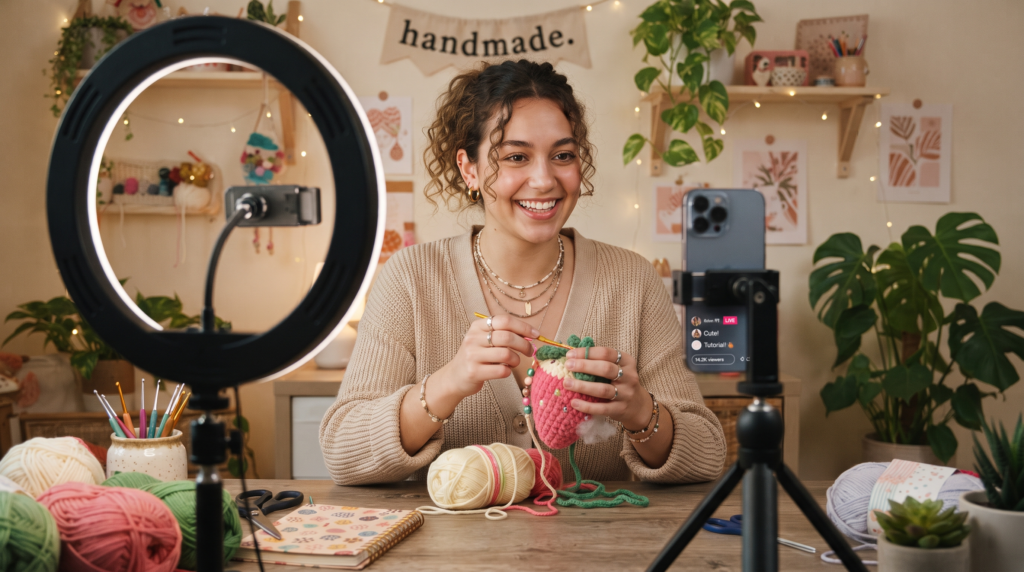
The Numbers Don’t Lie: How Big Is the Gen Z Crochet Trend?
Before diving into the “why,” let’s look at the scale of what’s happening.
- TikTok dominance: The #crochet hashtag has amassed over 15 billion views on TikTok, making it the platform’s most popular craft by a massive margin — beating calligraphy, origami, and needlework combined.
- Demographic shift: According to data from Crochet Penguin, over 73% of crocheters are now between 18 and 34 years old — a complete inversion from two decades ago, when the hobby was dominated by people aged 50 to 65.
- Market growth: Etsy currently hosts over 8 million active crochet listings, more than any other handmade category on the platform.
- Search volume: Google consistently ranks “crochet pattern” among its top craft-related searches globally — a position it has held every year since 2021.
This isn’t a micro-trend. It’s a structural shift in who crochets, why they do it, and what it means.
Reason 1: The Slow Fashion Rebellion
Gen Z is the most environmentally conscious generation to date — and they’re deeply skeptical of fast fashion. According to research on the Gen Z craft revival, young makers are increasingly choosing to make their own garments instead of buying disposable clothing.
When you crochet your own sweater, bag, or cardigan, you control everything: the fiber, the fit, the colors, and the labor conditions. That level of intentionality is the opposite of a Shein haul. As one craft blogger noted, crochet carries the same cultural pull as thrifting — it’s sustainable, individual, and anti-mass-market.
In 2026, this has translated into real fashion moments. Crochet co-ord sets, bucket hats, and structured handbags have sold out at brands from Zara to independent Etsy sellers. At Coachella 2026, metallic crochet pieces were among the most photographed street-style looks.
Crochet isn’t just a hobby anymore — it’s a fashion statement that happens to be handmade.
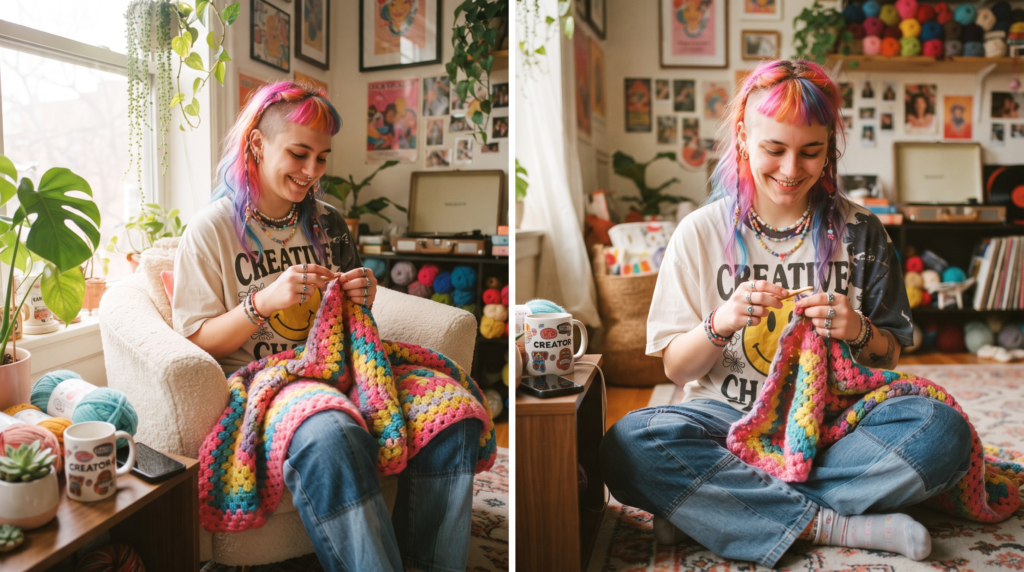
Reason 2: Crochet as Digital Detox and Mental Health Tool
Here’s where the psychology gets interesting. A 2020 international study published in Perspectives in Public Health surveyed 8,391 crocheters across 87 countries and found:
- 89.5% said crochet helped them feel calmer
- 82% said it helped them feel happier
- 74.7% said it helped them feel more useful
- Mood scores improved significantly after crocheting sessions
For Gen Z — a generation where over 61% report experiencing anxiety — the repetitive, tactile nature of crochet acts as a form of mindfulness without the app.
The rhythmic motion of stitches, the softness of yarn, and the visible progress row by row create what experts call a “flow state” — the same mental calm associated with meditation.
A USA TODAY reporter documented her own experience in 2025: after quitting doomscrolling and picking up a crochet hook, she reported better sleep, less anxiety, and more presence. “Creating something I could hold helped me fight through the gloom I felt in my day-to-day life,” she wrote. “This sense of accomplishment fed my brain more dopamine than scrolling through video after video ever could.”
In short, Gen Z isn’t just crocheting because it’s trendy. They’re crocheting because it makes them feel better.
Reason 3: TikTok and the Algorithm Effect
Crochet and TikTok are a perfect match — and the platform’s algorithm is largely responsible for the craft’s viral spread.
Unlike Instagram, where you follow specific accounts, TikTok’s “For You Page” learns what you engage with and serves you more of it. Watch one crochet tutorial, like one “crochet haul” video, and suddenly you’re on “CrochetTok.” From there, the content is endless: tutorials, time-lapses, “what I made this week” updates, and viral pattern recreations.
This algorithmic loop has created a self-sustaining ecosystem. Beginners see finished projects and think, “I could make that.” They learn from free tutorials, post their own progress, and inspire the next wave. The most popular crochet content creators on TikTok have millions of followers and get hundreds of thousands of views per video — reach that traditional craft magazines never had.
The result? A hobby that once spread through church groups and library classes now spreads through 60-second videos — and Gen Z is the native audience.
Reason 4: The Desire for Individuality and Self-Expression
Gen Z values uniqueness in a way that previous generations didn’t. In a world of mass-produced clothing and algorithm-curated aesthetics, wearing something you made yourself is the ultimate flex.
Hand-dyed yarns, custom color palettes, and one-of-a-kind patterns mean no two handmade pieces are identical. As KnitPro notes, “Every finished project feels personal and original” — whether it’s a granny square cardigan in neon colors or a poetcore-inspired lace blouse.
Crochet also fits into broader Gen Z aesthetics like Cottagecore (romantic, pastoral, handmade) and the “Make It Yourself” movement. It’s not just about the final product — it’s about the identity of being someone who creates rather than consumes.
Reason 5: Low Barrier to Entry and Instant Community
Unlike sewing (which requires a machine) or knitting (which many find harder to fix when mistakes happen), crochet is genuinely accessible. You need one hook, one ball of yarn, and a free YouTube tutorial. Total startup cost: under $15.
That low barrier matters to a generation that values trying things without heavy investment. And once you’re in, the community is immediate. Social platforms allow makers to share progress, ask questions, celebrate “finished objects,” and commiserate over tangled yarn. As the editor of Simply Crochet magazine put it: “There’s a strong sense of community in crochet. Our readers love taking part in crochet-together projects and sharing their magazine makes.”
This community aspect turns a solitary hobby into a social one — even if you’re crocheting alone in your bedroom, you’re part of a global conversation.
Is Crochet Still in Style in 2026? Absolutely — Here’s the Proof
If you’re wondering whether this trend has peaked, the evidence says no. Crochet has evolved from a pandemic hobby into a year-round fashion and lifestyle staple.
2026 crochet trends dominating right now:
Table
| Trend | What It Looks Like | Why Gen Z Loves It |
|---|---|---|
| Metallics & Embellishments | Beaded crop tops, metallic-thread cardigans | Festival-ready and Instagram-worthy |
| Statement Silhouettes | Oversized sculptural shapes, bulky textures | Bold self-expression |
| Crochet Co-ord Sets | Matching balaclava/sweater combos, shorts + cardigans | Effortless, shareable outfits |
| Granny Square Revival | Structured vests, tailored skirts, modern blazers | Nostalgia + customization |
| Poetcore | Open lacework, romantic blouses, ethereal accessories | Soft, slow, intentional aesthetic |
Crochet bags, in particular, have become a category of their own — from structured mini shoulder bags to Japanese knot bags, they’ve surpassed seasonal appeal entirely.
Why Is Crochet So Addictive? The Dopamine Factor
Ask any Gen Z crocheter why they can’t stop, and they’ll tell you: it’s addictive. But it’s not addiction in the negative sense — it’s a healthy feedback loop.
Every row completed is a micro-win. Every finished piece is a tangible dopamine hit. Unlike digital achievements (likes, followers, streaks), a crocheted item is something you can hold, wear, or gift. That physicality creates a deeper sense of accomplishment.
The 2020 wellbeing study confirmed this: crocheters’ moods improved significantly after a session, and many reported using the craft to manage grief, chronic illness, and pain.
Combine that with the social validation of posting finished work online, and you have a hobby that feels good at every stage — making it, finishing it, and sharing it.
FAQ: Gen Z and Crochet
Is crochet outdated?
No — crochet is more relevant in 2026 than it has been in decades. What was once seen as old-fashioned has been rebranded by Gen Z as a sustainable, creative, and mentally healthy hobby. With over 15 billion TikTok views and major fashion week presence, crochet is definitively not outdated.
Is crocheting a healthy hobby?
Yes, research strongly supports this. The international “Happy Hookers” study found that nearly 90% of crocheters felt calmer after a session, and 82% felt happier. For Gen Z specifically, crochet serves as a low-cost mindfulness practice and a break from screen-based anxiety.
Is crochet an attractive hobby?
Subjectively, yes — and the data backs it up. Dating apps and social media have increasingly featured crochet as an attractive trait because it signals patience, creativity, and emotional intelligence. More importantly, the confidence and calm that come from making something by hand tend to translate into how people carry themselves.
What does the yarn emoji 🧶 mean in Gen Z?
The 🧶 emoji has become shorthand for the crochet and knitting community online. Gen Z uses it in bios, captions, and comments to signal “I’m a maker” or “I’m on CrochetTok.” It’s part of the visual language of the craft revival.
What do you call a person who crochets?
The technical term is a crocheter. Some people use “crochet artist” or simply “maker.” The community is generally informal — if you crochet, you’re one of us, regardless of skill level.
Is crocheting a talent or skill?
It’s a skill anyone can learn. While some people pick it up faster than others, crochet doesn’t require innate artistic talent. It’s a motor skill developed through repetition — which is exactly why it’s so accessible to beginners.
Final Thoughts: Crochet Isn’t Coming Back — It Never Left, But Gen Z Made It Cool
The Gen Z love affair with crochet isn’t about nostalgia. It’s about values. This generation has taken a traditional craft and aligned it with everything they care about: sustainability, mental health, individuality, community, and creative expression.
The tools are simple. The learning curve is gentle. The benefits are real. And the community is massive.
Whether you’re Gen Z yourself or just curious why your feed is suddenly full of granny squares and chunky cardigans, one thing is clear: crochet is no longer a hobby you inherit from your grandmother. It’s a movement you choose — stitch by stitch.
If you’re ready to pick up a hook and see what the hype is about, our beginner guide will help you decide between crochet and knitting: Is Crochet Easier Than Knitting? Full Beginner Guide.