What Crochet Hook Should Beginners Use? The Only Guide You Need
Walk into any craft store and you’ll face a wall of crochet hooks — metal, plastic, wood, ergonomic, inline, tapered, sizes from 0.6mm to 25mm. If you’re new to crochet, it’s overwhelming. So what crochet hook should beginners use, really?
The definitive answer: start with a 5.0mm (US H-8) aluminum or ergonomic hook paired with medium-weight (worsted/#4) yarn. This combination is recommended by virtually every crochet instructor, designer, and craft educator for one simple reason: it’s the sweet spot between visibility, control, and comfort.
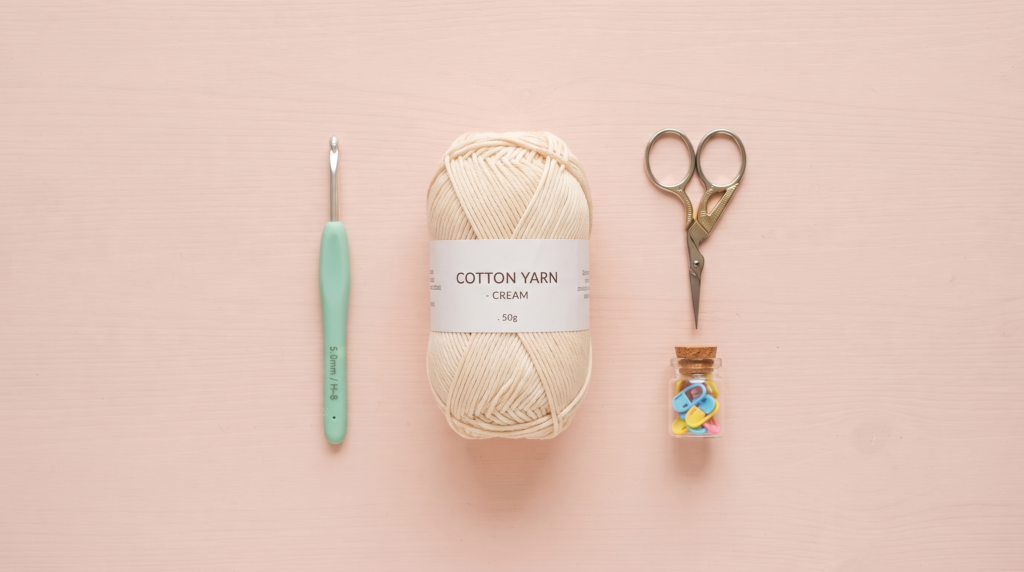
But not all 5.0mm hooks are the same. The material, handle shape, and hook throat style can make the difference between a frustrating first hour and a hobby you fall in love with. In this guide, we’ll break down exactly what to buy, what to avoid, and why the right hook matters more than you think.
If you’re still deciding whether crochet is the right craft for you, our full beginner comparison covers everything: Is Crochet Easier Than Knitting? Full Beginner Guide.
The Short Answer: Start Here
If you want to skip the details and just buy the right thing, here’s your shopping list:
| What to Buy | Why |
|---|---|
| 5.0mm (H-8) hook | Medium size = easy to see stitches, easy to control tension |
| Aluminum head | Smooth glide, yarn doesn’t snag, affordable |
| Ergonomic or cushioned handle | Reduces hand fatigue during long first sessions |
| Medium-weight (worsted/#4) yarn | Pairs perfectly with 5.0mm; most beginner patterns use this combo |
| Light, solid color yarn | Dark or fuzzy yarn makes learning twice as hard |
Total cost to start: $6–$15 for a single quality hook and one ball of yarn.
According to crochet designer Briana K, who has tested hooks for over 15 years, “A 5mm hook is what I’d tell almost every beginner to start with. It pairs perfectly with worsted-weight yarn, and the stitches are large enough to see clearly while you’re learning.”
Why 5.0mm Is the Magic Size for Beginners
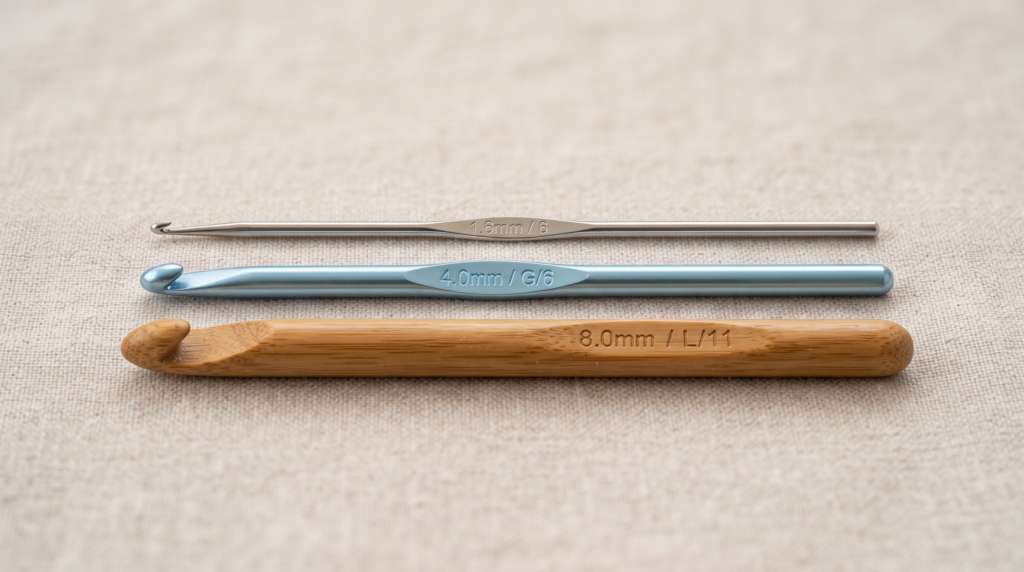
Crochet hooks range from tiny 0.6mm steel hooks for thread lace to massive 15mm+ hooks for jumbo blankets. So why does 5.0mm (US H-8) dominate every beginner recommendation?
The Stitches Are Big Enough to See
With a 5.0mm hook and worsted yarn, each stitch is roughly the size of a grain of rice — large enough that you can clearly see where to insert your hook, count stitches, and spot mistakes. Go smaller (3.5mm or below) and you’re squinting at tight, tiny loops. Go much bigger (8mm+) and the stitches become so loose that tension control becomes harder, not easier.
It Matches 90% of Beginner Patterns
Most beginner patterns — dishcloths, scarves, granny squares, simple coasters — are written for worsted-weight yarn with a 5.0mm or 5.5mm hook. Buy a 5.0mm and you can immediately start almost any “beginner-friendly” pattern you find online without buying additional hooks.
Tension Is Forgiving
At 5.0mm, the hook gives you enough space to work comfortably even if your tension is too tight (the #1 beginner struggle). If you find yourself fighting to push the hook through each stitch, you can size up to 5.5mm or 6.0mm for your first project without any problem.
Hook Material Matters: Aluminum, Bamboo, Plastic, or Wood?
The material your hook is made from affects how yarn slides, how the hook feels in your hand, and how much you pay. Here’s how they compare for beginners:
| Material | Feel | Best For | Price | Beginner Rating |
|---|---|---|---|---|
| Aluminum | Smooth, cool, glides fast | General learning, most yarns | \$2–\$8 | ⭐⭐⭐⭐⭐ |
| Ergonomic (rubber/silicone grip) | Soft, cushioned, reduces strain | Long sessions, hand pain | \$8–\$20 | ⭐⭐⭐⭐⭐ |
| Bamboo/Wood | Warm, slightly grippy | Slippery yarns (silk, cotton) | \$4–\$12 | ⭐⭐⭐⭐ |
| Plastic | Lightweight, budget-friendly | Kids, travel, loose tension | \$1–\$5 | ⭐⭐⭐ |
| Steel | Very smooth, heavy | Thread crochet, lace — not for beginners | \$3–\$10 | ⭐⭐ |
Aluminum: The Beginner Default
Aluminum hooks are the standard for a reason. The metal is smooth enough that yarn glides without snagging, but not so slippery that you lose control. Brands like Susan Bates and Boye have made aluminum hooks for decades, and a basic 5.0mm aluminum hook costs under $5. If you’re not sure what you like yet, start here.
Ergonomic: Worth the Upgrade
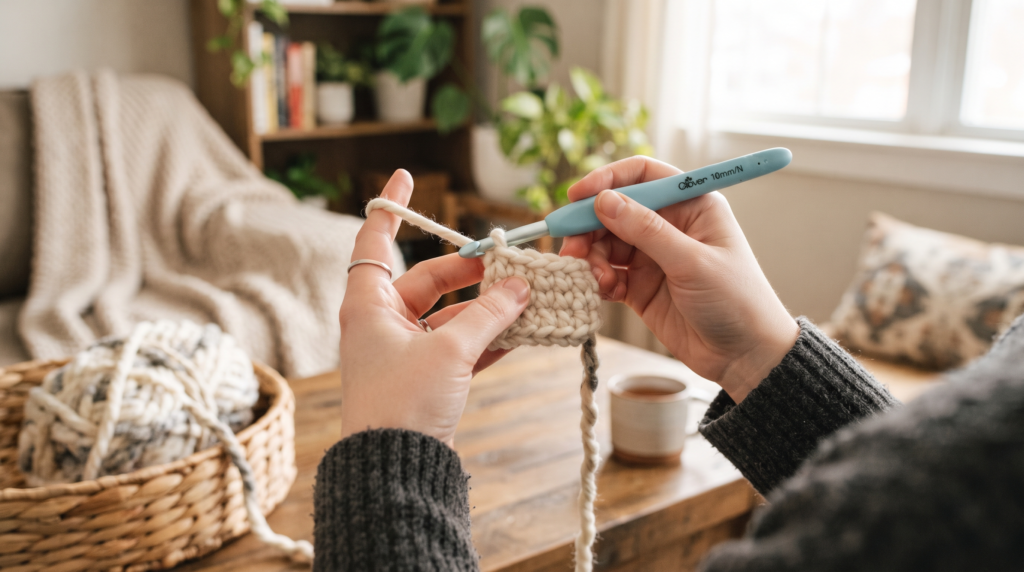
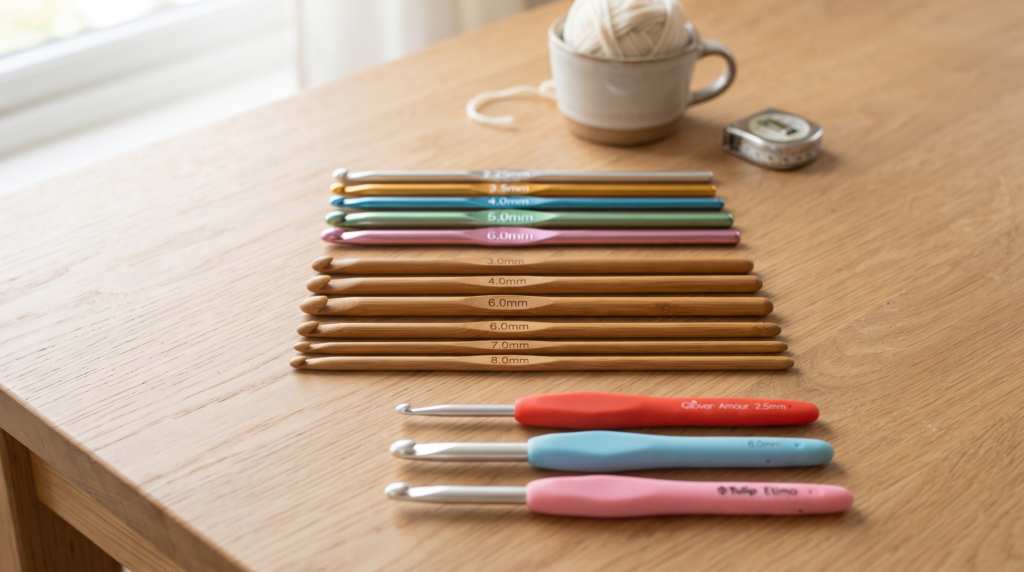
If you plan to crochet for more than 20 minutes at a time, an ergonomic hook with a cushioned handle is a game-changer. The wider grip reduces the “death grip” that causes hand cramps and wrist pain. Popular options like Clover Amour and WeCrochet Dots hooks feature soft rubber handles that let your hand relax while maintaining control.
According to Just Be Crafty, “Ergonomic handles reduce hand strain by allowing a looser grip, which helps prevent wrist pain and can even help you crochet faster.”
Bamboo/Wood: The Natural Alternative
Wooden hooks have a slight natural grip that slows yarn down. This can be helpful if you tend to crochet too loosely, or if you’re working with a slippery yarn like cotton or silk. However, wood can feel “sticky” with acrylic yarn, which is what most beginners start with.
Plastic: Budget-Friendly but Imperfect
Plastic hooks are cheap and lightweight, but the surface isn’t as smooth as aluminum. Yarn can drag or catch on molded seams, which creates unnecessary frustration when you’re still learning the basic motions.
Inline vs. Tapered: The Hook Shape Debate
This is the single most important design difference beginners don’t know about — and it affects how you crochet more than material or brand.
| Feature | Inline Hook | Tapered Hook |
|---|---|---|
| Hook head | Sits in a straight line with the shaft | Has a gradual slope down to the throat |
| Yarn grip | Deeper groove holds yarn more securely | Shallower groove, yarn releases easier |
| Best for | Tight tension, amigurumi, precision | Loose tension, speed, general projects |
| Common brands | Susan Bates, Coopay | Boye, Clover Amour |
Which Should Beginners Choose?
Most beginners can start with either style, but tapered hooks are slightly more forgiving for your first projects. The gradual slope helps yarn slide off the hook smoothly, which reduces the “yarn keeps getting stuck” frustration. Once you know your natural tension, you can experiment with inline hooks, which many crocheters prefer for tight work like amigurumi.
How Do You Hold Your Hook? Pencil Grip vs. Knife Grip
Before buying a hook, consider how you naturally hold it. There are two main grips:
- Pencil grip: Hold the hook like a pencil, between your thumb and index finger, resting on your middle finger. Common among people who write a lot or have a fine motor background.
- Knife grip: Hold the hook like a knife, with your hand wrapped around the handle. Common among people who prefer a firmer, more anchored hold.
Ergonomic hooks with triangular or rounded handles tend to work well for both grips, while very thin metal handles can feel uncomfortable for knife-grip crocheters. If possible, hold a hook in your hand before buying — the right fit is personal.
Should You Buy a Single Hook or a Full Set?
Start with one hook. Here’s why:
A quality single 5.0mm hook costs $5–$10. A full set of 9–12 sizes costs $30–$100. As a beginner, you don’t yet know:
- Whether you’ll prefer aluminum or ergonomic
- Whether you like inline or tapered
- What your natural tension is
- Whether crochet will stick as a hobby
Buy one 5.0mm hook, make your first dishcloth or granny square, and pay attention to how it feels. Does your hand cramp? Does the yarn snag? Do you wish the handle was thicker? Your answers will tell you what to buy next.
Once you’ve completed 2–3 projects and know you enjoy crochet, then invest in a set. At that point, you’ll know whether you want an ergonomic set, an interchangeable set with one handle and multiple heads, or a traditional fixed set.
Hook Size Cheat Sheet: What Size for What Yarn?
While 5.0mm is your starting point, you’ll eventually need other sizes. Here’s a quick reference:
| Yarn Weight | Recommended Hook Size | Typical Projects |
|---|---|---|
| Lace / Thread (0) | 1.5–2.25mm (steel) | Doilies, fine lace |
| Fingering (1) | 2.25–3.5mm | Socks, lightweight shawls |
| Sport (2) | 3.5–4.5mm | Baby items, light garments |
| Worsted (4) | 5.0–5.5mm | Scarves, blankets, dishcloths |
| Bulky (5) | 6.0–8.0mm | Quick blankets, chunky scarves |
| Super Bulky (6) | 8.0–12.0mm | Oversized throws, rugs |
| Jumbo (7) | 12.0mm+ | Extreme chunky blankets |
Always check your yarn label — it lists the recommended hook size. For beginners, go with the recommendation or slightly larger if your stitches feel too tight.
Common Beginner Hook Mistakes (And How to Avoid Them)
Mistake 1: Buying a Tiny Hook for “Fine Detail”
A 2.0mm hook and thin cotton thread might look elegant, but it’s a nightmare to learn on. Tiny hooks require perfect tension and excellent eyesight. Save thread crochet for your second year, not your second day.
Mistake 2: Using Dark or Textured Yarn With Any Hook
Even the best 5.0mm hook can’t help you if you can’t see your stitches. Pair your hook with a light-colored, smooth yarn — beige, pale gray, or soft pastels work best for learning.
Mistake 3: Death-Gripping a Thin Metal Hook
If your fingers go numb after 15 minutes, it’s not because crochet is hard — it’s because your hook is too thin and you’re gripping too tight. Switch to an ergonomic handle or wrap the existing handle with polymer clay or grip tape as a temporary fix.
Mistake 4: Ignoring the Hook Throat Style
If you learned on a tapered hook and switch to inline (or vice versa), your tension might change unexpectedly. Stick with one style per project, especially for garments where sizing matters.
FAQ: Crochet Hook Questions From Beginners
What is the best crochet hook brand for beginners?
Clover Amour and WeCrochet Dots are consistently rated as the best ergonomic starter hooks. For budget-friendly aluminum, Susan Bates (inline) and Boye (tapered) are reliable standards. Any of these will serve you well for your first projects.
What happens if I use the wrong size hook?
Using a hook that’s too small creates tight, stiff fabric that’s hard to work into. Using one that’s too large creates loose, holey fabric with poor structure. For practice swatches, it doesn’t matter much. For garments, the wrong size can change the fit completely.
Are ergonomic crochet hooks worth it?
Yes — especially if you have hand pain, arthritis, or plan to crochet for long sessions. The cushioned handles reduce strain and allow a looser grip. Even if you don’t have hand issues now, an ergonomic hook can prevent them from developing later.
Can I use the same hook for all projects?
No. Different yarn weights require different hook sizes. However, a 5.0mm hook will handle the majority of beginner projects. As you branch into amigurumi, lace, or chunky blankets, you’ll need to expand your collection.
What’s the difference between US and metric hook sizes?
US hooks use letter/number codes (H-8, I-9, J-10) while most of the world uses millimeters (5.0mm, 5.5mm, 6.0mm). The metric system is more precise — always check the mm measurement when buying hooks, especially online.
Should beginners use metal or plastic hooks?
Metal (aluminum) is generally better for beginners. It has a smoother surface that helps yarn glide, which makes learning the basic motions easier. Plastic is cheaper but can have molded seams that catch yarn.
Table of Contents